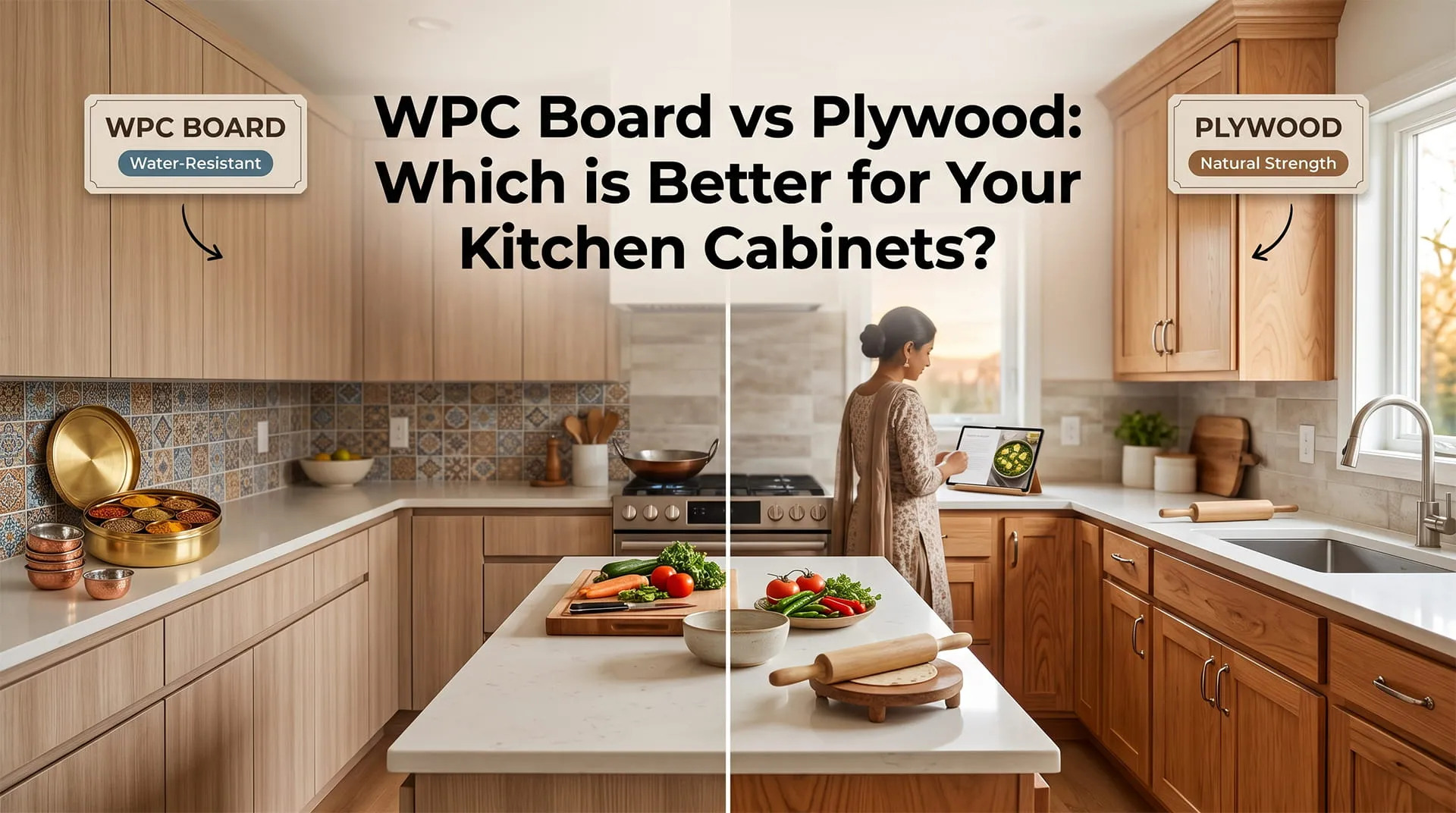
WPC Board vs Plywood — Comparing the structural core, moisture resistance, and termite-proof qualities of WPC board and traditional plywood for modern modular kitchen cabinets.
1. Understanding the Contenders: WPC Board vs Plywood
To understand which material is better, we must first look at how they are manufactured:- Plywood: Plywood is made by gluing together thin sheets of wood veneer (plies) under high pressure using synthetic adhesives. Standard commercial plywood is highly vulnerable to moisture. While Boiling Water Resistant (BWR) and Boiling Water Proof (BWP/Marine) plywood offer better water resistance, they are still fundamentally organic wood products.
- WPC Board: WPC (Wood Polymer Composite) is an engineered material made by blending natural wood fibers/flour with high-quality polymer resins (PVC) and stabilizers. Extruded under extreme heat and pressure, it forms a dense, homogenous solid board. It combines the structural strength of wood with the total moisture immunity of polymers.
2. The Limitations of Plywood in Modern Kitchens
While plywood is strong and handles weight well, it is prone to several critical failures when used under kitchen sinks, near dishwashers, or in humid regional climates:- Moisture Swelling & Rotting: The sink cabinet is the most vulnerable area in any kitchen. Minor pipe leaks or dampness cause plywood to absorb water. Once wet, the wood fibers expand, leading to rotting, fungal growth, and structural collapse.
- Termite & Borer Vulnerability: Plywood contains cellulose, which is the primary food source for termites. Humid and warm spaces behind kitchen cabinets provide the perfect breeding ground for termite infestations, which can destroy an entire kitchen within months.
- Formaldehyde Emissions: Plywood is manufactured using chemical glues (urea-formaldehyde or phenol-formaldehyde). Over time, these glues release toxic Volatile Organic Compounds (VOCs) into your kitchen. Because food ingredients and utensils are stored inside these cabinets, this represents a severe health hazard.
3. WPC Board: The Game-Changer for Modular Kitchens
Using WPC as a waterproof board solves almost all the inherent limitations of plywood:- 100% Waterproof & Termite-Proof: WPC has zero water absorption. Even if subjected to direct water leakage under the kitchen sink, it will never swell, warp, peel, or rot. Additionally, because it contains synthetic polymers, it is completely immune to termites and borers.
- Class-Leading Fire Retardancy: Kitchens are high-risk areas for fire. Plywood acts as fuel and propagates flame. In contrast, high-density WPC boards are self-extinguishing and fire-retardant (Class V0 fire rating), providing essential safety for your family.
- VOC-Free & Eco-Friendly: Premium WPC boards contain no toxic formaldehyde glues. They are lead-free, VOC-free, and 100% recyclable. This makes them highly hygienic for food storage areas.
- No Lamination Required Internally: Plywood requires laminates (sunmica) to be pasted on both sides to protect it from moisture. WPC boards come with a smooth, pre-finished matte or glossy white surface. You can use them directly inside cabinet carcasses without wasting money on internal laminate pasting and edge-banding.
“Traditional waterproof plywood relies entirely on its external laminate seal. Once a carpenter cuts the board or a screw is inserted, the core is exposed. WPC is waterproof through its entire thickness. Even if you drill or cut it, the exposed core remains 100% waterproof.”
4. Cost Comparison: WPC Board for Kitchen Price
When evaluating budget, many homeowners compare raw material prices. A raw BWP plywood board might seem cheaper than a high-density WPC board. However, this is a common calculation error. Let’s analyze the true WPC board for kitchen price comparison:- The Hidden Costs of Plywood: To make a plywood cabinet carcass, you must buy the plywood, purchase internal laminates, buy adhesive (like Fevicol), and pay labor charges for laminate pasting and edge-banding.
- The WPC Cost Advantage: Because WPC is pre-finished, you completely eliminate the cost of internal laminates, adhesive, and additional labor.
- Long-Term Return on Investment (ROI): A plywood kitchen in damp or termite-prone regions may need replacement in 5-8 years. A premium WPC kitchen lasts for decades. In Uttarakhand, where humidity is high and termite issues are common, WPC saves you lakhs of rupees in future maintenance and replacement costs.
Head-to-Head Comparison: WPC vs Plywood
| Feature / Parameter | Traditional Plywood | Alstone WPC Board |
|---|---|---|
| Water & Moisture Resistance | Poor to Moderate (Swells and delaminates) | 100% Waterproof (Zero absorption) |
| Termite & Pest Protection | Vulnerable (Requires chemical treatments) | 100% Termite & Borer Proof |
| Fire Retardancy | Combustible (Supports fire propagation) | Self-Extinguishing (Fire retardant) |
| Toxicity & VOCs | Emits toxic formaldehyde fumes | VOC-Free, Lead-Free & Eco-friendly |
| Internal Finish | Requires pasting laminates on inside surfaces | Smooth, ready-to-use white surface |
| Average Lifespan | 5-10 Years (Vulnerable to leaks) | 25+ Years (Lifetime warranty) |
5. Why Alstone WPC is the Best No.1 in this Industry
Not all WPC boards are created equal. The market is filled with low-cost, low-density foam boards loaded with excessive calcium carbonate filler. These cheap boards have poor screw-holding strength, causing kitchen cabinet hinges to sag and pull out. This is exactly why Alstone WPC is the best No.1 in this industry:- Unmatched Density and Strength: Alstone WPC boards feature a high density (0.60 to 0.70 g/cm³) and an optimized wood-to-polymer ratio. This ensures excellent screw-holding capacity, allowing heavy soft-close kitchen hinges and drawers to stay firmly anchored without loosening.
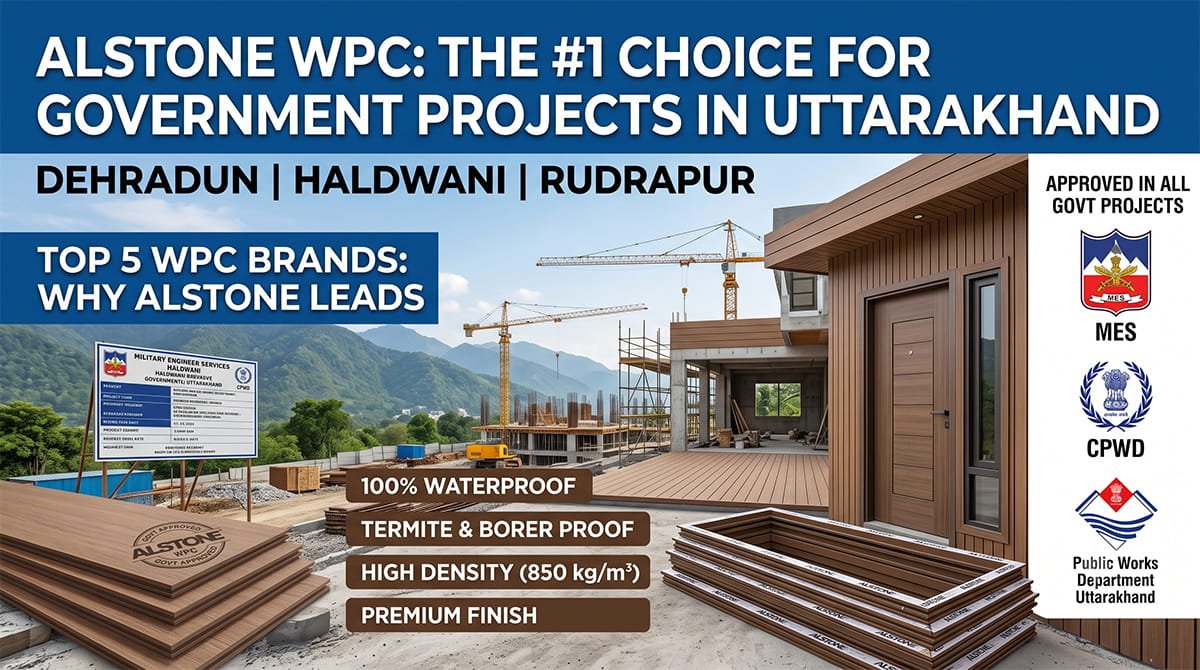
- Certified Safety Standards: Alstone is the trusted partner for government and premium private projects. Their products are PWD, CPWD, MES, and GRIHA certified, meeting the highest structural and environmental safety parameters.
- 25-Year Peace of Mind Warranty: Alstone stands behind its boards with a 25-year warranty against warping, swelling, and termite damage, assuring homeowners of a lifetime product.
- Lead-Free Composition: Unlike cheap local brands that use lead stabilizers in polymer formulation, Alstone WPC is manufactured using safe, eco-friendly ingredients, making it absolutely safe for contact with kitchen storage containers and food items.